
Projects: Graduate School (After 2024)
The projects below were completed during my graduate studies (after 2024) and are arranged in reverse chronological order (from most recent to least recent). For earlier projects, see Before Graduate School (Before 2024).
2026
scVIP: personalized modeling of single-cell transcriptomes for developmental and disease phenotypes
Posted on April 22, 2026 (Link & Codebase Link)

Conducted with Allen Institute scientist Jane Lai, Ph.D. (Allen Institute profile, LinkedIn profile) and the guidance of Professor Mariano Gabitto (Allen Institute profile, UW profile), scVIP is a Bayesian deep learning framework that connects million-scale single-cell gene data to patient-level clinical outcomes (such as aging, Alzheimer’s, Huntington’s, and rheumatoid arthritis). By combining generative modeling (VAE or variational autoencoder) with attention-based multi-instance learning (MIL), it predicts disease progression while pinpointing which specific cell populations drive the condition.
I served as the second author — taking the lead on code refactoring, establishing reproducible pipelines, and leading efforts on the technical documentation. The preprint was publicly released on bioRxiv on April 20, 2026.
Deep Learning for Digital Pathology: Tumor Detection Using the PCam Dataset
Written and submitted on March 20, 2026 (Link)
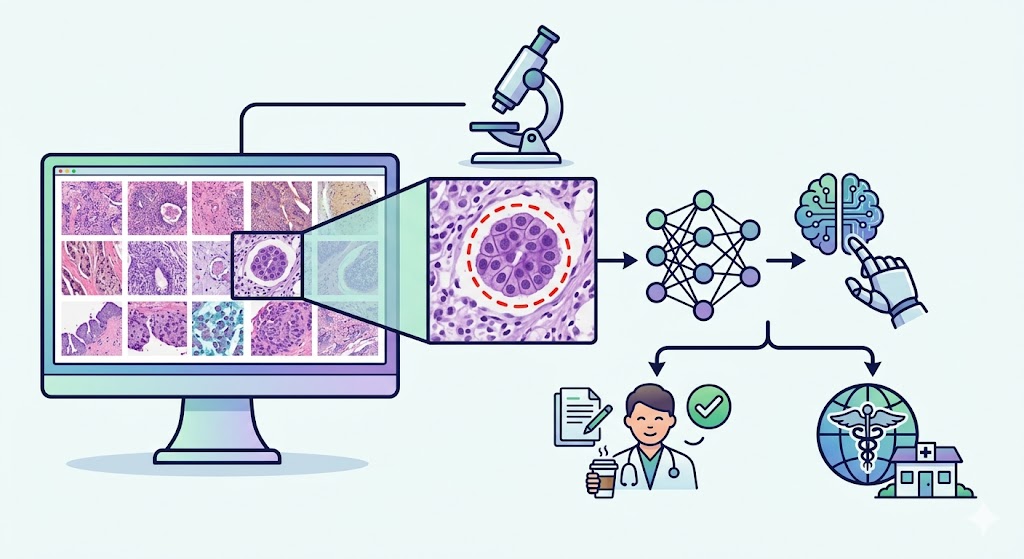
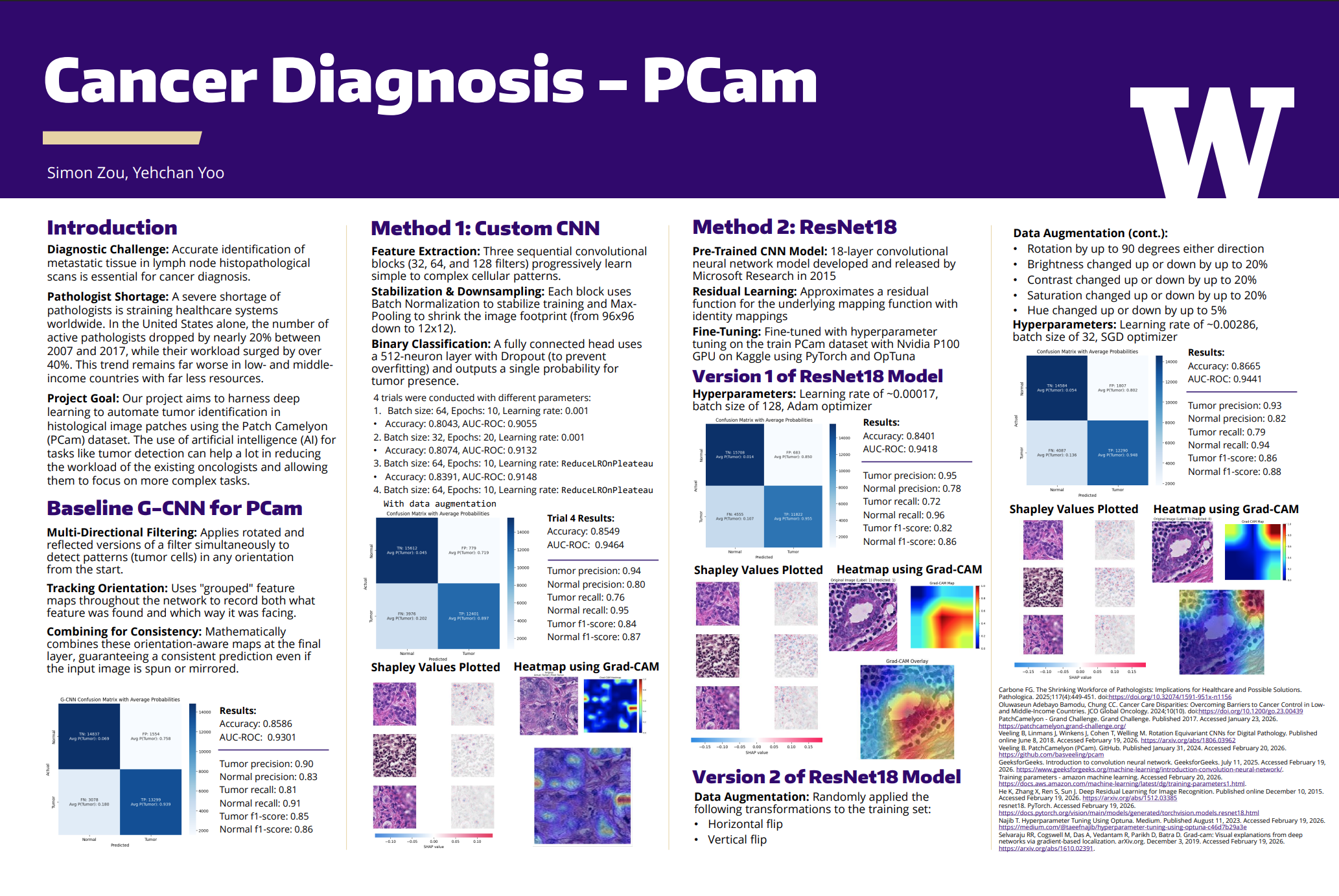
This project was written and done in collaboration with UW ECE graduate student Simon Zou as the final project for CSE 527: Computation Biology - Explainable AI in Biology & Biomedicine by Professor Su-In Lee during the Winter 2026 quarter. Accurate identification of metastatic tissue is critical for cancer diagnosis, yet healthcare systems face a severe shortage of pathologists. To address this bottleneck, our paper focused on automating tumor detection in histopathological images using deep learning architectures. The study evaluated a custom convolutional neural network against a baseline equivariant model and a pre-trained residual network. While all models achieved high diagnostic accuracy and the fine-tuned residual network with data augmentation attained the highest overall accuracy, the custom model demonstrated vastly superior computational efficiency. Additionally, interpretability analyses showed that the custom model relied on highly localized, granular cellular structures to make its predictions, whereas the pre-trained networks focused on broader spatial features. These findings indicate that lightweight, interpretable, and purpose-built diagnostic tools can perform competitively with deeper networks, offering an efficient triage solution to alleviate clinical workloads without compromising patient safety.
- This paper was also presented as a poster in the course’s own poster session on March 12, 2026. The poster can be found below or accessed through this link.
2025
The Impact of Client Balance and Credit Default on Term Deposit Subscription, Controlling for Socioeconomic Factors
Written and submitted on December 9, 2025 (Link)

This paper was written in collaboration with fellow MS Statistics student Alison Wong (LinkedIn, GitHub) as the final project paper for BIOST 531: Statistical Methods for Analysis with Missing Data by Professor Katie Wilson during the Autumn 2025 quarter. This study analyzes the Bank Marketing dataset from a Portuguese banking institution to quantify the effects of average yearly balance and credit default on term deposit subscription while controlling for missing socioeconomic data. Assuming a Missing at Random (MAR) mechanism based on observed data patterns, we utilized Complete Case (CC) analysis, Bayesian likelihood, and Multiple Imputation (MI) methods to handle missing data inside the dataset. We found that higher balances significantly increased subscription odds (~26% per 10,000 Euros), while credit default reduced them (~38–41%). Notably, CC analysis overestimated the negative effect of default compared to the other two methods, hinting at potential bias from using CC analysis.
Evaluation of Imputation Methods Under Different Missing Data Conditions
Written and submitted on June 9, 2025 (Link)
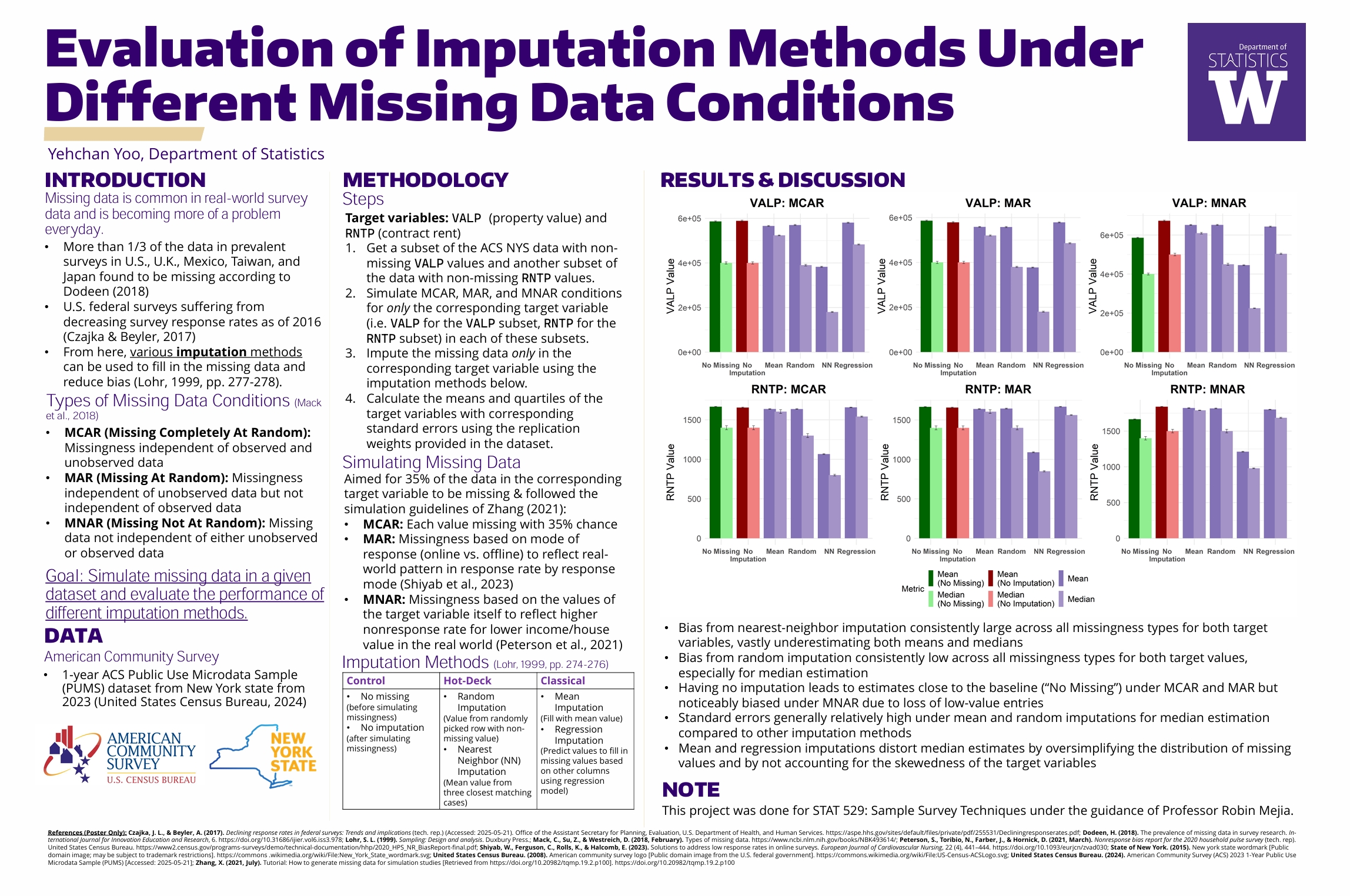
This paper was written as the final project paper for STAT 529: Sample Survey Techniques by Professor Robin Mejia during my time at the University of Washington. This paper simulates how different imputation methods perform under three missing data conditions — MCAR, MAR, and MNAR — for two variables RNTP (rent price) and VALP (property value) in the 1-year 2023 ACS Public Use Microdata Sample for New York State. For each missing data condition, the study applies five imputation approaches: no imputation, mean, random, nearest neighbor, and regression. The study found that random imputation yields the best quartile estimates under MNAR, while mean and regression methods perform better for means but distort quantiles. Nearest neighbor is the least effective, being slow and highly biased.
- This paper was also presented as a poster in the Spring CSSS Poster Session on June 9, 2025. The poster can be found below or accessed through this link.
Replication of Rec-R1
Written and submitted on June 6, 2025 (Link, GitHub Repo)

 |
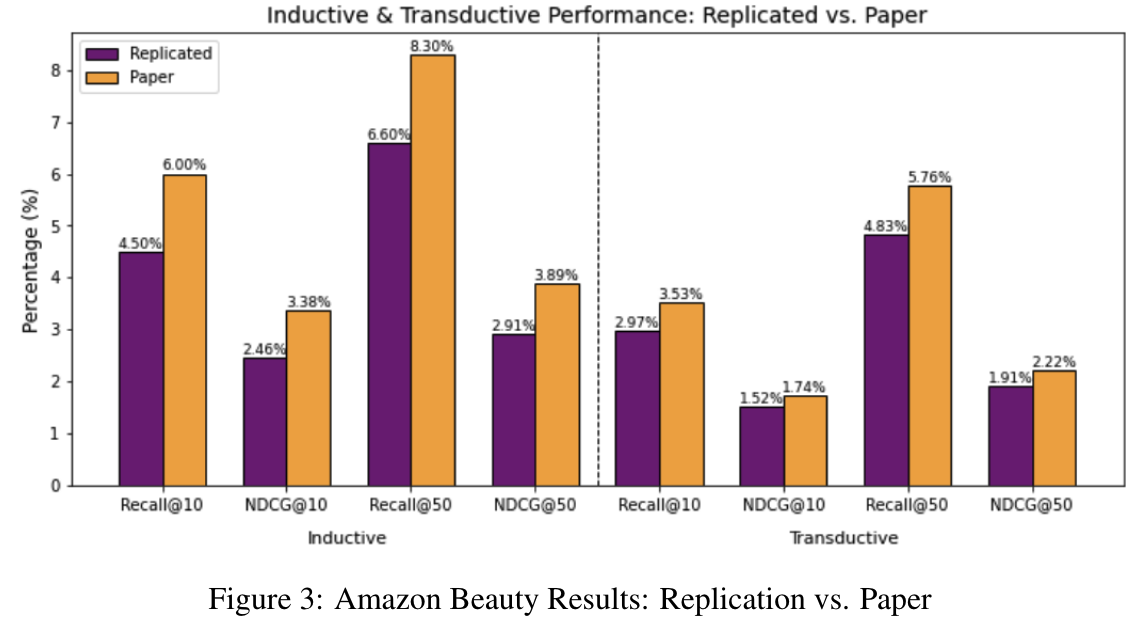 |
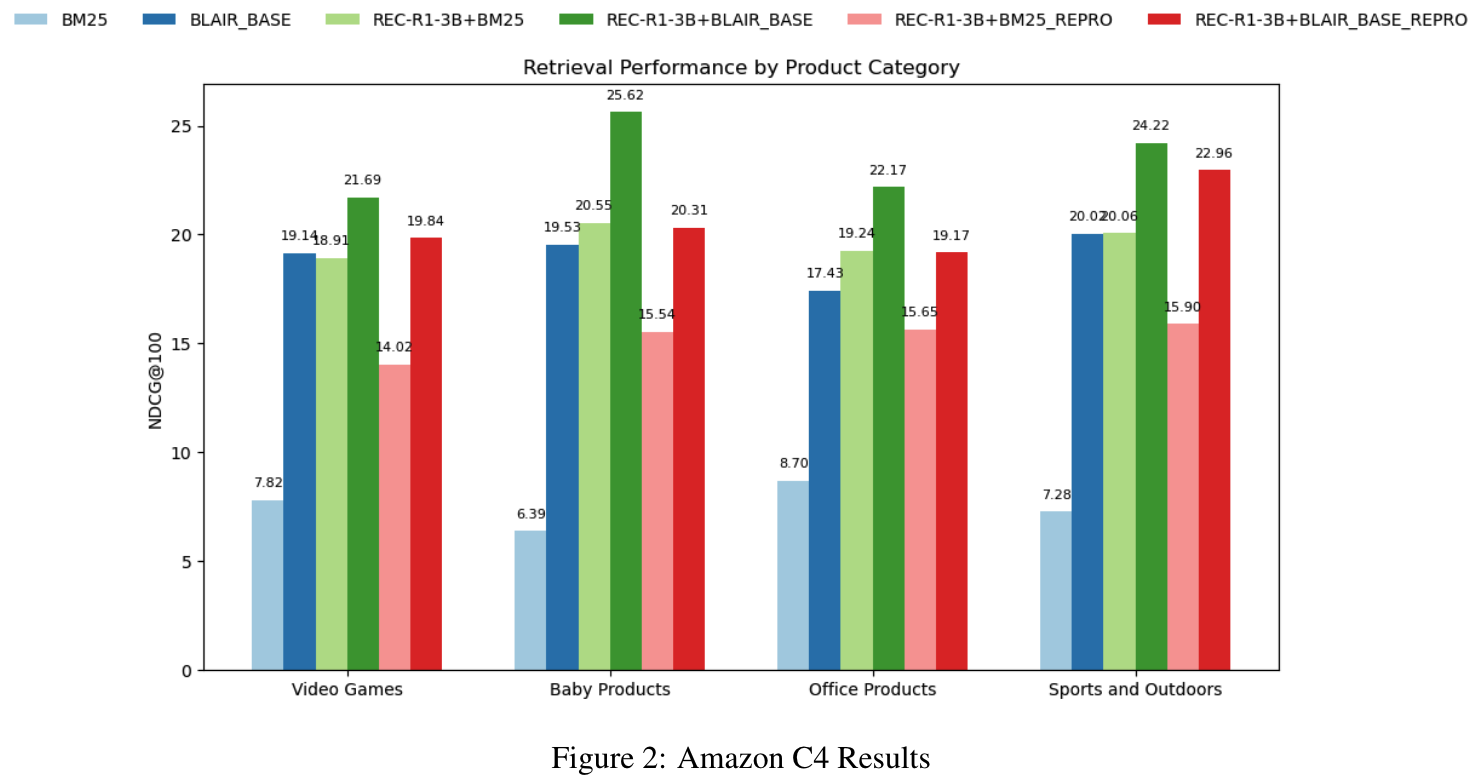
This paper was written in collaboration with my classmates Justin Chae, Johan Lindqvist, and Thomas Lilly as the final project paper for CSE 493S/599S: Advanced Machine Learning at the University of Washington, taught by Professor Sewoong Oh. This project aimed to replicate the results of the Rec-R1 paper, which proposes a reinforcement learning framework combining large language models (LLMs) with recommendation systems. Using publicly available code and datasets, my teammates and I verified that Rec-R1 improved model performance across several tasks, including product search and sequential recommendation, and preserved general-purpose reasoning capabilities better than supervised fine-tuning. However, we could not reproduce the paper’s claims of computational efficiency due to limited access to high-memory GPUs and encountered significant issues with poorly documented code. Despite these challenges, the project confirmed Rec-R1’s performance benefits and highlighted the need for better resource access and code maintenance for reproducibility.